What is Reverse Shoulder Replacement?
Reverse shoulder replacement, also called reverse total shoulder arthroplasty, is a type of joint replacement that reverses the natural setup of the shoulder.
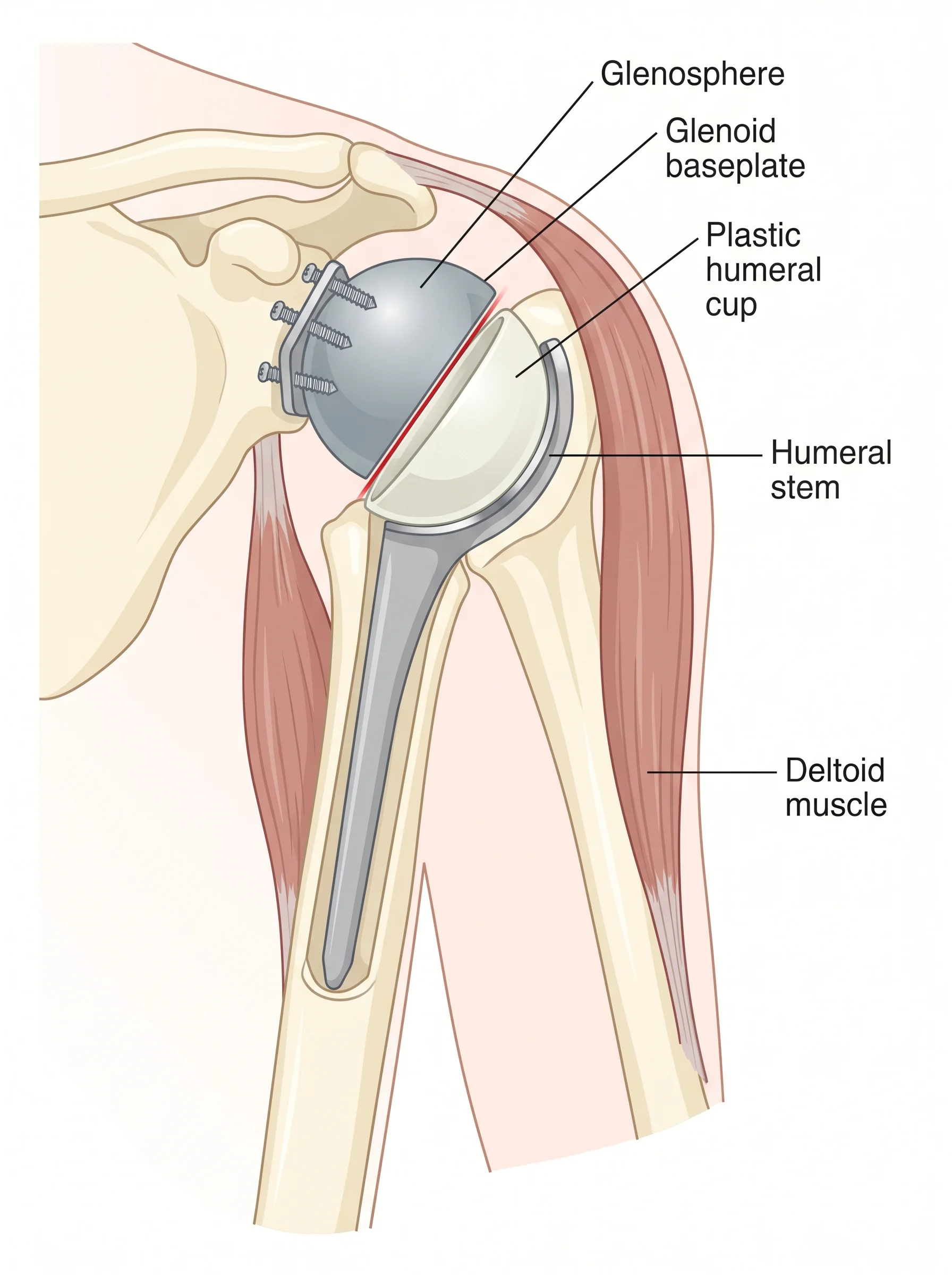
Normally the ball is on the arm bone and the socket is on the shoulder blade. In this surgery, a metal ball is attached to the shoulder blade and a socket is placed on the arm bone.
This switch changes which muscles power the shoulder. Instead of relying on the rotator cuff, it lets the deltoid, the large muscle over the top of the shoulder, lift the arm. That is why it fits people whose rotator cuff is badly torn or cannot be repaired.
It is used for arthritis combined with a failed rotator cuff, for certain complex fractures, and when a previous replacement has not worked. Replacement is considered after non-surgical care has been tried, as the sections below explain.
What happens during Reverse Shoulder Replacement, step by step?
During reverse shoulder replacement, Dr. Wodicka makes an incision at the front of the shoulder to reach the joint.
A metal ball is secured to the shoulder blade where the socket used to be, and a socket-shaped piece is fixed to the top of the arm bone where the ball used to be. This reversed design lets the deltoid, the large muscle over the shoulder, lift the arm in place of the torn rotator cuff. Because it does not depend on the cuff, it can restore motion that a standard replacement could not in these cases. Most people stay in the hospital briefly after surgery, and the plan is tailored to the reason for the replacement.
What is recovery like after Reverse Shoulder Replacement?
Recovery from reverse shoulder replacement happens over months and is guided by the reversed design, which shifts the work to the deltoid muscle.
Most people wear a sling early and begin gentle motion under guidance to protect the new joint.
Physical therapy focuses on regaining motion and building strength in the muscles the new shoulder relies on. Many people return to light daily activities within several weeks, while fuller motion and strength commonly develop over about four to six months, according to general guidance from the American Academy of Orthopaedic Surgeons. These are ranges, not promises. Your timeline depends on the reason for surgery, your health, and your rehabilitation, which your surgical team will map with you.
Who performs reverse shoulder replacement in Fort Lauderdale?
Ross Wodicka is a board certified orthopedic surgeon who performs reverse shoulder replacement in Fort Lauderdale, FL. Fellowship trained at Southern California Orthopedic Institute (Sports Medicine). Dr. Wodicka sees patients at the practice in Fort Lauderdale; appointments can be requested through this site.
What do patients ask most often?
Why is it called a reverse shoulder replacement?
It is called reverse because it switches the natural positions of the shoulder's ball and socket. A metal ball is placed on the shoulder blade and a socket on the arm bone, the opposite of the normal arrangement. This change lets the deltoid muscle move the arm when the rotator cuff can no longer do so.
Who is a candidate for reverse shoulder replacement?
It is used for people with shoulder arthritis combined with a badly torn or unrepairable rotator cuff, for certain complex fractures, and when a previous replacement has failed. A standard replacement relies on healthy cuff tendons, so the reverse design fits when those tendons cannot do their job. An evaluation confirms which type fits.
How is recovery different from a standard shoulder replacement?
Recovery focuses on the deltoid muscle rather than the rotator cuff, since the reversed design shifts the work there. The overall timeline is similar, with fuller motion and strength commonly developing over about four to six months, according to general guidance from the American Academy of Orthopaedic Surgeons. These are ranges, not promises.
Will I be able to raise my arm overhead after surgery?
Many people regain the ability to lift the arm, since the procedure is designed to restore motion when the rotator cuff has failed. How much overhead reach returns varies with the reason for surgery and your rehabilitation. Dr. Wodicka can discuss realistic expectations for your situation.
How do payments work?
Contact the office to confirm insurance participation.
This page is for general education and does not replace an evaluation by a physician. Individual treatment plans vary, and this content should not be used to self-diagnose.